Trail planning
A dog-walk checklist for the lakeshore
Plan for the posted route, the narrowest part of the trail and the drive home.
Check the exact trail and its access
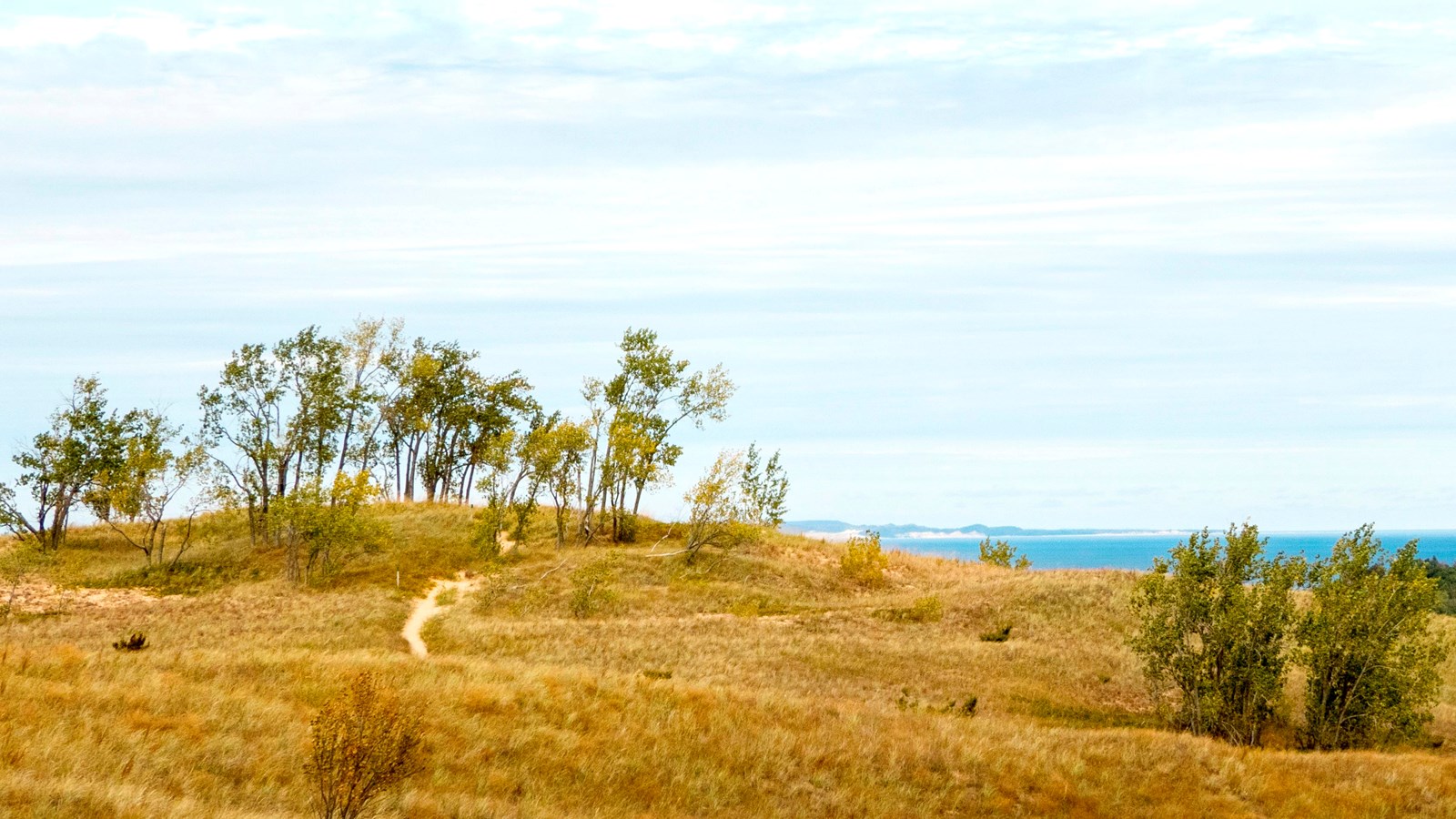
Open the land manager’s route page and the current pet map in the same sitting. A trail can welcome dogs even when a neighboring beach has a seasonal closure. A marked spur can have a different rule from the main route. At Sleeping Bear Dunes, the Dune Climb is closed to pets. The Cottonwood loop is a separate outing accessed via the seasonal Pierce Stocking Scenic Drive. Check announcements and follow the signs when you arrive.
Pack for the part of the walk you can predict
Take a familiar lead within the posted length limit, a collar or harness you have already used, water and a bowl, waste bags and a way to carry them out. Add a towel if sand or mud is likely, and keep the trail map available without a signal. Check the weather and give yourself more time on loose sand, where the distance alone can underestimate how long you will be outside.
Give other trail users space to pass
Look ahead for blind corners, boardwalks and short stretches with little room at the side. Gather the leash before you meet another group and choose a wider spot to pause if one is close by. It gives you a moment to keep the dog on your side when a bike, a group of children or another leashed dog appears. At overlooks, wait until there is room to stand clear of an edge and the path.
Follow B.A.R.K. on the trail
The National Park Service’s B.A.R.K. guidance asks visitors to bag pet waste, keep pets leashed, respect wildlife and know the places pets can go. If you see a roped area, give it room. Around nesting birds or other wildlife, turn away early so the dog does not have a chance to disturb them. Carry the waste bag until you find an appropriate receptacle.
Make the return trip part of the plan
Set a turnaround point you can shorten if the weather changes or the path is more crowded than expected. Back at the vehicle, offer water, check the dog and the gear for clinging debris, and set wet equipment aside for rinsing. If a short route worked well, make a note of the trailhead and the time of day. That is much more useful next weekend than trying to remember an exact mileage off the top of your head.