Fit & sizing
How to measure for a buckle collar
Start with your dog’s neck, then work out which width, buckle and adjustment range make sense together.
Measure the dog in front of you
Take a flexible tape and wait until your dog is standing or sitting calmly. Run the tape where the collar will actually rest, following the circumference of the neck without pulling it tight or leaving a loop of slack. Move bulky fur aside enough to see the tape and keep it flat. Write down the number before repeating the measurement. If two readings differ, notice whether the tape moved higher up the neck or caught on the coat. The maker’s chart for the exact collar comes next.
Use an old collar as a cross-check
A flat buckle collar that already fits can help you catch a measuring mistake. With the collar laid open, measure from the point where the buckle tongue meets its bar to the hole that the tongue normally goes into. The whole length from tip to tip includes material that never goes around the neck. Treat the existing collar as a second reading, especially if it is worn, has stretched or sits in a different place from the new design.
Read the hole spacing
Sloppy Chops uses the chosen neck measurement for the center hole on its standard buckle collar. Check that convention before using a size you remember from another brand. The available room above and below the center depends on the actual hole pattern. Think about haircuts or a fuller seasonal coat, and give the maker the actual measurement instead of adding a guessed allowance on top of a sizing rule that already accounts for the intended fit.
Look at the width and the hardware
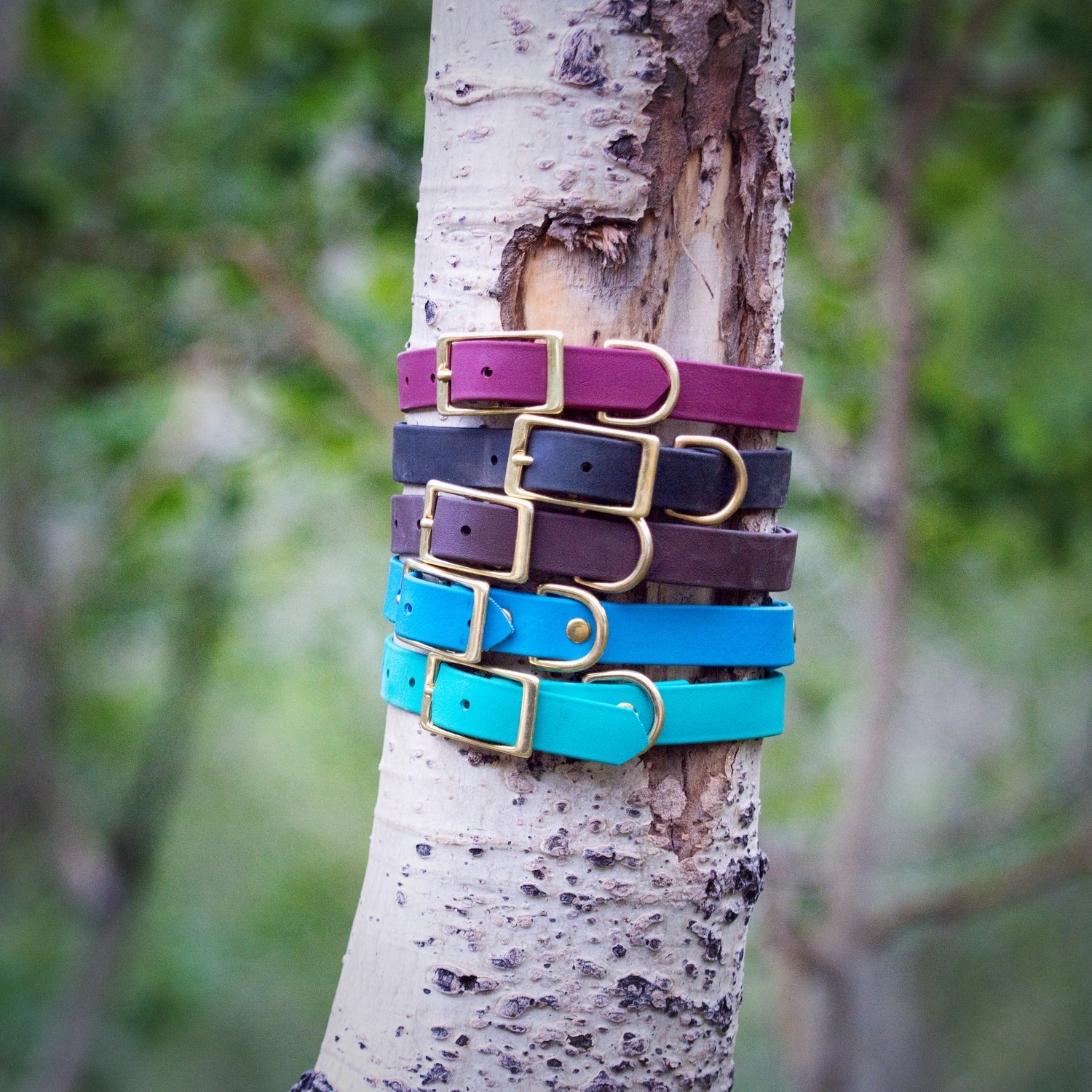
Look where the buckle will settle in relation to the throat, tag and harness. A very wide collar can cover a short neck almost completely even if its circumference is right. A narrower design or a tapered buckle section can make the same measurement feel less bulky. In a long coat, a wide band may be easier to find by hand, but it still needs clear space around other gear. If the maker shows hardware options side by side, use those photos to judge their relative size.
Recheck after a short walk
Clip up close to home and watch how the collar moves when your dog looks down to sniff or turns to check behind. Make sure the tongue is seated, the keeper catches the loose end and the leash clip sits on the intended ring. A collar that rotates, slips towards the head or interferes with movement deserves another fit check before a longer outing. For a dog with a history of backing out of collars, work with a qualified trainer or fitter on an appropriate walking setup.